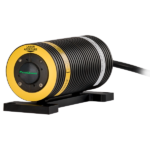
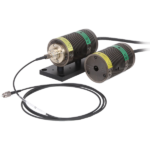
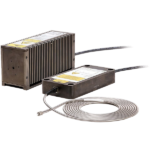
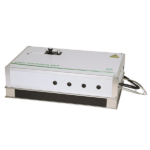
As there is no generally accepted specification for the term ‘Ultrashort’ the lasers presented here range from nanoseconds (ns) down to femtoseconds (fs).
There are many methods for generating ultrashort pulses. Generally for the LEDs and Laser diodes detailed below the electronics have been carefully designed to allow optical pulses in the tens of nanoseconds to be obtained, with pulse repetition rates from CW to MHz.
For shorter pulse durations the lasers can operate in a Q-Switched or mode locked regime. In Q-Switching energy is stored in the amplifying medium by optical pumping while the cavity Q is lowered (i.e. Higher cavity losses) to prevent the onset of lasing. When the cavity Q is restored, the stored energy is suddenly released in the form of a short pulse of light. In this mode high pulse energies (mJ’s) can be achieved with pulse repetition rate in the Hz to kHz.
Mode locking can be both active and passive. Passively mode-locked lasers are typically based on a saturable absorber, which allows for the generation of short pulses but has issues with jitter and electronic control. For those applications that require synchronisation with an external electronic signal active mode locking techniques are employed.